How Catheter-Based Valve Replacement Is Transforming Cardiac Care for High-Risk Patients
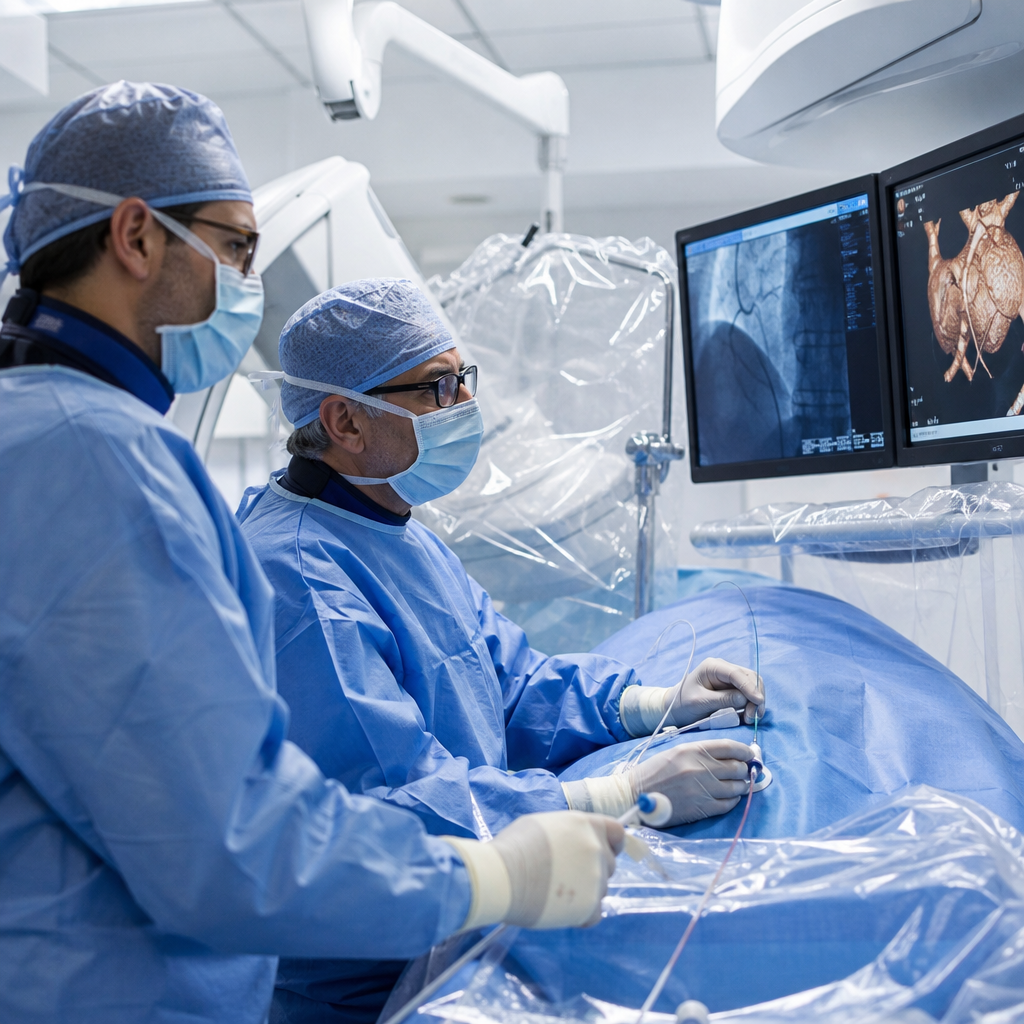
For decades, patients diagnosed with severe aortic stenosis faced a difficult reality: open-heart surgery was the only definitive treatment, and for many older or medically fragile individuals, that surgery carried risks too significant to justify. The emergence of transcatheter aortic valve replacement changed that equation entirely. By threading a replacement valve through a catheter — typically via the femoral artery — interventional cardiologists can now restore normal valve function without cracking the chest open. The results have been so compelling that this procedure has steadily expanded from the highest-risk patients to intermediate and even lower-risk populations, reshaping how the cardiology community approaches valvular heart disease.
Understanding Aortic Stenosis and Why Treatment Cannot Wait
The aortic valve sits at the exit point of the heart’s main pumping chamber, controlling blood flow into the aorta and out to the rest of the body. When calcium deposits accumulate on the valve leaflets over years, the opening narrows — a condition called aortic stenosis. The heart must work progressively harder to push blood through the restricted opening, leading to muscle thickening, reduced cardiac output, and eventually heart failure. Once symptoms appear — chest pain, fainting, or shortness of breath — the prognosis without intervention is sobering, with median survival measured in months to a couple of years.
Historically, surgical aortic valve replacement required placing the patient on cardiopulmonary bypass, stopping the heart, excising the diseased valve, and suturing a prosthetic replacement into position. For younger, otherwise healthy patients, this remains an excellent option with durable long-term outcomes. But for patients in their seventies, eighties, or those carrying significant comorbidities — kidney disease, prior cardiac surgery, severe lung disease — the surgical risk was often prohibitive. These patients were frequently told they were not candidates for surgery and were managed with medications that could slow but not reverse the disease’s progression.
The Mechanics Behind Catheter-Based Valve Delivery
The core innovation of transcatheter valve replacement lies in the ability to compress a functional prosthetic valve onto a delivery catheter, navigate it through the vascular system, position it precisely within the diseased native valve, and deploy it — all without stopping the heart or opening the chest. The prosthetic valve, typically made from bovine or porcine pericardial tissue mounted within a metal stent frame, is crimped to a fraction of its deployed diameter. Once the catheter reaches the aortic annulus under fluoroscopic and echocardiographic guidance, the valve is expanded — either by balloon inflation or by a self-expanding mechanism — anchoring itself within the calcified native valve and immediately restoring competent blood flow.
The transfemoral approach, accessing the femoral artery in the groin, is preferred when vessel anatomy permits because it is the least invasive and allows for local anesthesia or light sedation rather than general anesthesia. Alternative access routes — transapical, transaortic, or subclavian — exist for patients whose peripheral vessels are too narrow or tortuous. Procedural times have shortened dramatically as operator experience has grown, and many patients are discharged within one to two days of the procedure.
Imaging and Planning: The Foundation of Procedural Success
Precise pre-procedural planning is what separates successful outcomes from complications. A dedicated cardiac CT scan allows the team to measure the aortic annulus in three dimensions, assess the angle of the aorta, evaluate the coronary artery heights relative to the valve, and map the access vessels for diameter and tortuosity. This data drives valve sizing decisions — choosing a prosthesis that is too small risks paravalvular leak, while one that is too large risks annular injury. The integration of advanced imaging software has made this planning process increasingly systematic, reducing the variability that characterized early procedural experience.
Clinical Evidence and the Expansion of Eligibility
The pivotal PARTNER trials established the clinical foundation for this procedure. In inoperable patients, transcatheter valve replacement reduced one-year mortality by roughly half compared to medical management alone. In high-surgical-risk patients, outcomes were comparable to surgery. Subsequent trials in intermediate and low-risk populations demonstrated non-inferiority or superiority in certain endpoints, leading regulatory agencies to broaden approval criteria substantially. Today, the conversation in many heart valve programs has shifted from “Is this patient a candidate?” to “Which approach — transcatheter or surgical — best fits this patient’s anatomy, preferences, and long-term goals?”
Durability remains an area of active research. Surgical bioprosthetic valves have decades of follow-up data; transcatheter valves, being newer, have shorter track records. Structural valve deterioration, valve-in-valve procedures for failed transcatheter valves, and the implications of younger patient implantation are all subjects of ongoing registries and trials. The field is evolving rapidly, and the answers emerging from long-term follow-up studies will shape guidelines for years to come.
Multidisciplinary Heart Teams: A Model Worth Emulating
One of the most significant structural changes this procedure brought to cardiology is the formalization of the heart team model. Regulatory approval in many jurisdictions requires that transcatheter valve cases be reviewed by a multidisciplinary team including interventional cardiologists, cardiac surgeons, imaging specialists, and cardiac anesthesiologists before a treatment decision is made. This collaborative approach mirrors best practices seen in other complex medical fields — much like how a family dentist coordinates with specialists to deliver comprehensive, patient-centered oral care, cardiac teams bring multiple disciplines together to ensure each patient receives the most appropriate intervention for their specific situation.
Cleveland Clinic Abu Dhabi: Advanced Valve Care in the Region
Access to this level of cardiac innovation matters enormously for patients in the Middle East and North Africa region. Cleveland Clinic Abu Dhabi has established a comprehensive structural heart program that brings the full spectrum of transcatheter valve therapies to patients who previously would have needed to travel internationally for such care. The program’s heart team approach, advanced imaging infrastructure, and experienced operators reflect the same standards that have made transcatheter valve replacement a global standard of care. For patients and families seeking detailed information about eligibility, procedural planning, and what to expect during recovery, learning about TAVR directly from the Cleveland Clinic Abu Dhabi health library provides a trustworthy, clinically grounded starting point.
Patient Selection and the Importance of Informed Decision-Making
Not every patient with aortic stenosis is best served by the transcatheter approach, and not every center offering the procedure has equivalent outcomes. Patients and families navigating these decisions benefit from seeking care at high-volume programs with transparent outcome reporting. Questions worth asking include: How many cases does this center perform annually? What is the institutional rate of major complications such as stroke, pacemaker implantation, or vascular injury? Is there a formal heart team review process? What follow-up imaging and clinical monitoring is planned post-procedure?
For those exploring the broader landscape of minimally invasive medical procedures and how to evaluate providers, guidance on identifying reputable clinical providers offers useful frameworks that apply across specialties — emphasizing credentials, transparency, and patient-centered communication as hallmarks of trustworthy care.
Conclusion: A Procedure That Redefined Possibility
Transcatheter aortic valve replacement stands as one of the most consequential advances in cardiovascular medicine of the past two decades. It transformed a death sentence for inoperable patients into a manageable, recoverable condition. It challenged the assumption that open surgery was the only path to durable valve repair. And it established a model of multidisciplinary, evidence-driven care that continues to influence how complex cardiac conditions are managed worldwide. As the technology matures, as durability data accumulates, and as procedural techniques continue to refine, the boundaries of who can benefit will almost certainly continue to expand — offering hope to patients who, not long ago, had none.













Post Comment